
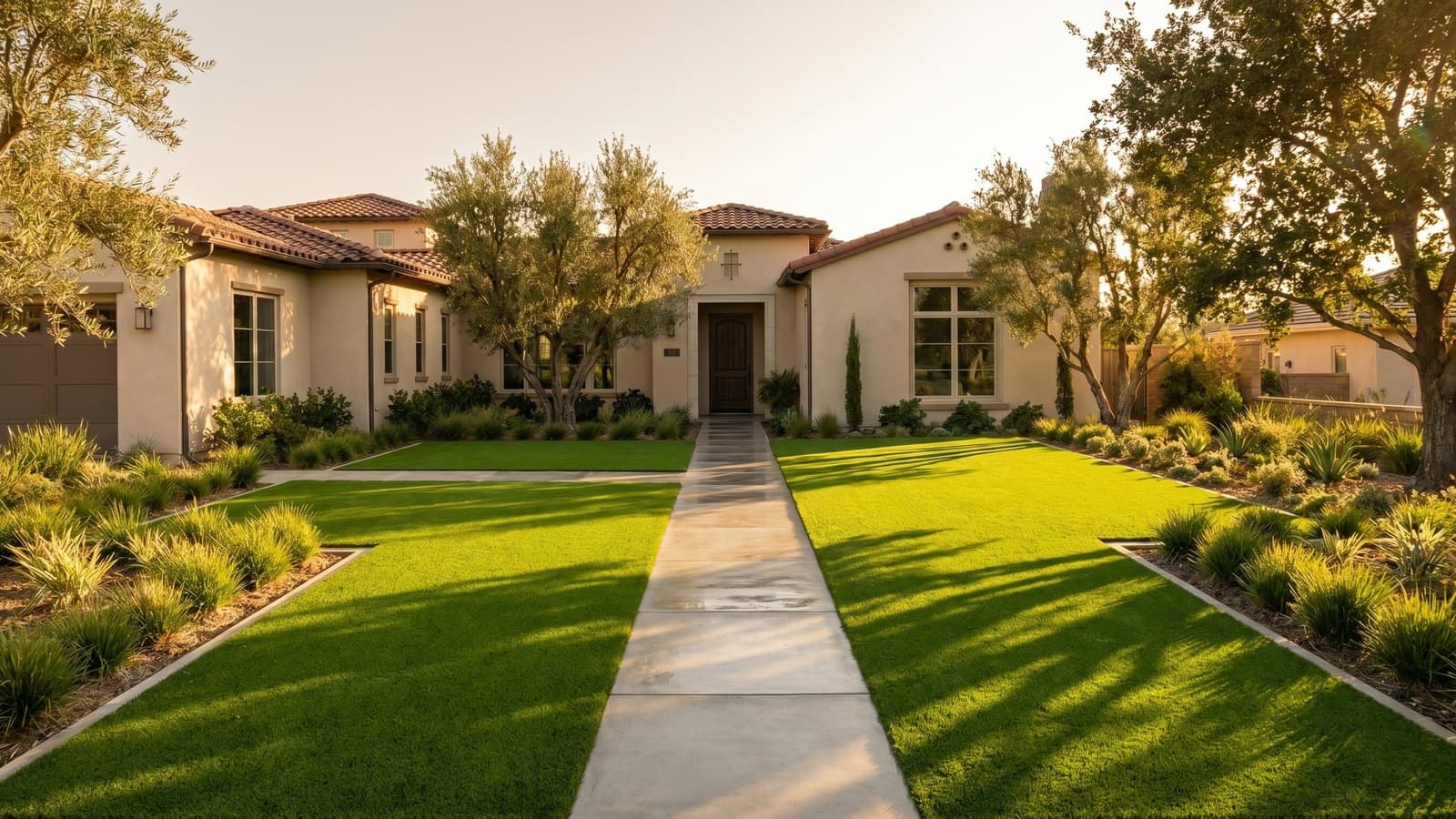
California Civil Code Section 4735 prohibits HOAs from outright banning artificial turf or other drought-tolerant landscaping on residential property. Despite this, HOA architectural review processes still apply, and some HOAs have created strict aesthetic requirements that effectively limit product choice. This guide covers the legal framework, common HOA review processes, and how to navigate them.
California Civil Code Section 4735
Civil Code Section 4735 prohibits HOAs from outright banning artificial turf or low-water landscaping on residential separate-interest property. The statute was strengthened multiple times during California drought years. HOAs cannot adopt rules that prohibit the use of artificial turf, but they can impose reasonable aesthetic standards and architectural review requirements. The legal threshold: HOA rules must allow artificial turf installation while permitting reasonable aesthetic guidelines.
What HOAs Can Require
- Specific product approval (color, pile profile, fiber type)
- Architectural review submittal before installation
- Coordination with surrounding common-area landscape aesthetic
- Maintenance standards (no visible damage, regular brushing, etc.)
- Permit verification for projects requiring permits
- Drainage and grade verification to prevent runoff onto common areas
What HOAs Cannot Do
- Outright ban artificial turf (Civil Code 4735 prohibits this)
- Require natural grass be maintained
- Penalize homeowners for converting to artificial turf in compliance with the rules
- Charge unreasonable approval fees beyond typical architectural review costs
- Discriminate between artificial turf and other approved landscape conversions
Common HOA Architectural Review Process
- Homeowner submits application with product specs, color samples, and project rendering
- HOA architectural review committee evaluates aesthetic compliance with community standards
- Committee may request revisions (different color, alternate product, additional landscape integration)
- Approval granted in writing with any conditions documented
- Installation proceeds; final inspection by HOA after install for compliance verification
Rigorous HOA Communities in SoCal
Some SoCal HOAs run particularly rigorous review processes: The Oaks (Calabasas), Newport Coast, Coto de Caza, Bel-Air Estates, Mountain View Estates, North Ranch (Thousand Oaks), Westlake Island, Lake Sherwood, Hidden Valley, La Jolla Farms, Rancho Santa Fe Covenant. These HOAs typically take 30 to 45 days for review, request multiple sample submittals, and may require formal landscape designer involvement. We've completed installs through every major SoCal HOA; documentation discipline matters.
What to Submit for HOA Review
- SYNLawn product specification sheet (the specific product line: Precision, Lush, Premium, etc.)
- Color sample (physical sample, not photo)
- Project rendering showing the install in context
- Drainage plan if drainage is being modified
- Existing-condition photos showing the lawn being replaced
- Surrounding-property aesthetic comparison (especially for street-visible front yards)
- Installer credentials (SYNLawn certified, CSLB licensed, insured)
If the HOA Denies Your Application
Civil Code 4735 provides legal protection if an HOA flatly denies artificial turf. If the denial cites general aesthetic concerns rather than specific product issues, you can request the HOA articulate the specific concerns and propose product modifications to address them. Most HOA denials in our experience are about specific product details, not the artificial-turf concept itself; we work through revisions to address the concerns. Legal escalation is rare; most reasonable HOAs work toward approval given proper documentation.